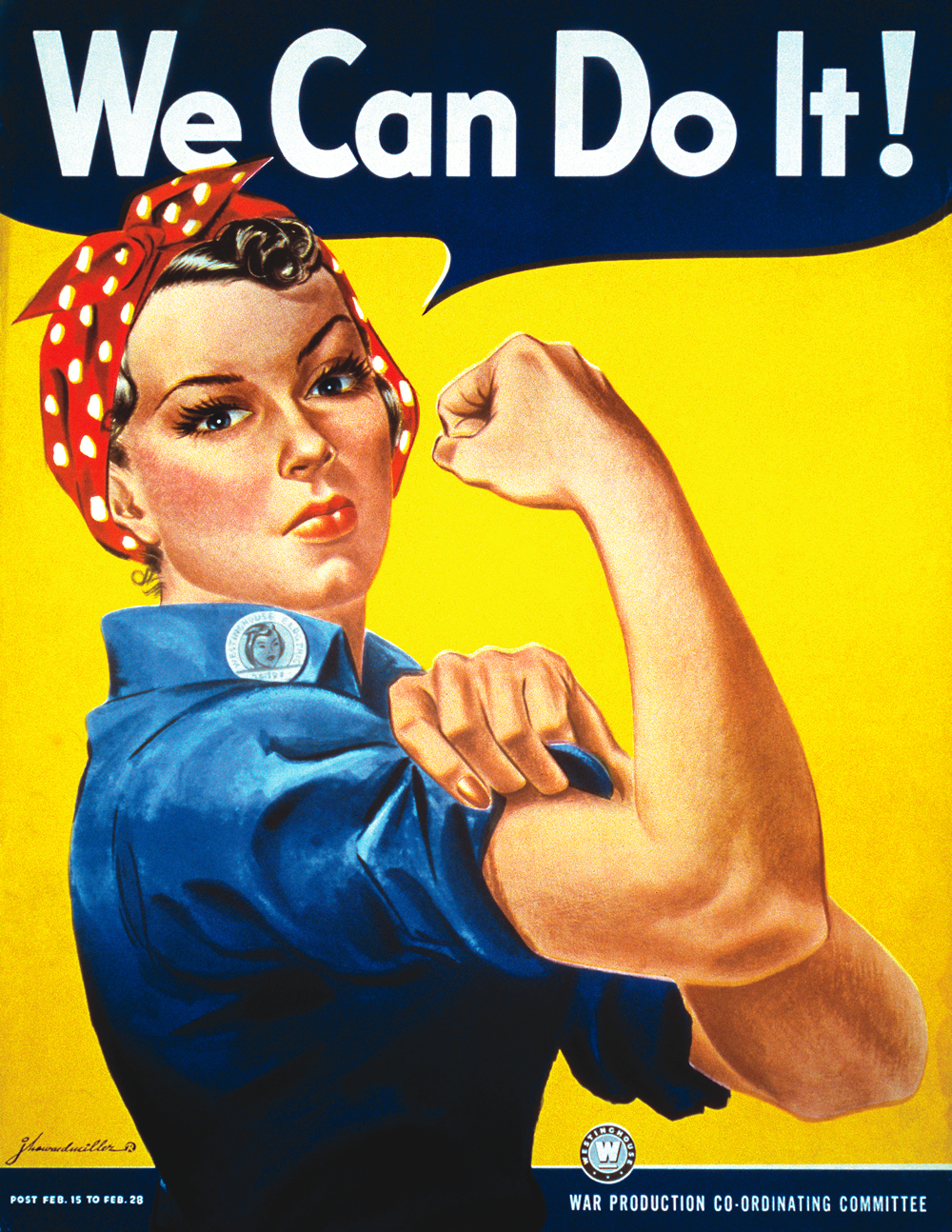
 It's similar in structure to the "Rosie the Rivetter" poster, which uses the personal plural pronoun to avoid the appearance of authority, and gives a face to the call to action. It simulates the sensation of Rosie personally calling on women to enter the workforce, rather than the government. In this way, the ComeOut! article is more honest than the poster because the authors of the article might realistically be street demonstrators ranting about the need for people to come out, while the government is in no way comparable to their mascot, the rivetter.
Sunday, October 5, 2014
Presentation of the "Come Out" Newspaper
The ComeOut! cover article calls on sexuality minortiy members to be proud of their identity and "come out." It is essentially a call-to-action propaganda piece. The frequent use of capitalization for emphasis throughout the article establishes a tone of urgency. The use of humor reduces the formality of the otherwise serious topic and makes the author feel like a peer rather than an authority. The title photo gives a face to the ideas embodied in the text, giving it a level of humanity. The article ends up reading like a street demonstrator's rant.
 It's similar in structure to the "Rosie the Rivetter" poster, which uses the personal plural pronoun to avoid the appearance of authority, and gives a face to the call to action. It simulates the sensation of Rosie personally calling on women to enter the workforce, rather than the government. In this way, the ComeOut! article is more honest than the poster because the authors of the article might realistically be street demonstrators ranting about the need for people to come out, while the government is in no way comparable to their mascot, the rivetter.

Ethos of the "Come Out!" Newspaper
 |
| Roslyn Bramms, Editor |
The paper's goal of convincing people to be public about their sexuality was most affective with a demographic already willing to go against the expectations of their community. The diverse amature staff created a counterculture appeal that lent itself well to this goal. This can also account for the paper's later failure under the direction of the Gay Liberation Front, which brought a more organized, less relatable tone to the publication.
Logos Behind the Lens of the Stonewall
Demonstrators
 The Stonewall Riot demonstration
photograph includes an appeal to logic in some aspects. At first glance the
flag in the picture appears to suggest a pathetic appeal to Americans’
patriotism. Upon further inspection, however, the audience would realize that
the flag is being flown upside down. The law declares that
this should only be done in times of distress or imminent danger. This suggests
that the photographer had a reason for capturing the flag being flown in this
way. When analyzed through the law, it would seem that the photograph logically
implies these demonstrator’s distress over the state of gay people in America
in the 1960s. This use of logic works to connect the audience with the real
facts about the plight of gay Americans at that time. The distress that gay
Americans were in was reflected through the photograph’s use of the word “oppression”.
The nation at that time was still harshly anti-gay,
and so this photographer is trying to rile support from his audience by
capturing a call to end this oppression; to end the distress, shown by the
upside down flag.
Logos of “Come Out!”
Most propaganda directed towards the gay
community has a certain pathetic appeal about it. It is necessary to pull at
the heartstrings in some instances in order to maximize the effect texts have
on say mothers or family members, anyone who can lend an empathetic hand to the
gay rights’ cause. That is not to say, however, that these pieces of rhetoric
do not posses any logical appeal as well. The article in “Come Out!” used logic
in order to persuade members of the gay community to come out in support of gay
rights. The author of this cover article appeals to the logos of the audience
by building an argument through reason. He started off his argument by telling
the audience that “In New York a homosexual is legitimate as an individual but
illegitimate as a participant in a homosexual act”. In doing this the author
made it apparent that there is a factual basis behind the plight of gay people;
discrimination against the gay community is, in fact, a problem in the real
world, not just something dramatized in the media. In the next step of this
argument, the author presented a feasible solution to the problem, in that
“Come Out!” aimed to gather oppressed peoples into a “cohesive body of people
who [did] not find the enemy in each other”. The usage of this argument was
purely to appeal to the audience’s logic as it was a simple problem-solution
presentation. It is interesting to note that there are statistics to back up
the idea that a supportive group of gay people could help the gay community
overall. There are reasons why the suicide rate among the LGBT community is so
high, and was so in the 1960s as well. Research suggests that intense feelings
of homophobia
that LGBT members experience cause incredible stress on these individuals, potentially
harming their mental stability. A supportive group to stand behind someone in
this community is possibly enough to offer some form of stability back into
their lives. In order to see this logical appeal, however, much of the pathetic
appeal needs to be stripped away.
Thursday, October 2, 2014
Presentation of Fink's Demonstration Photo
The two primary subjects in Fink's photo are the Stonewall banner and the man carrying the American flag. The high contrast of the banner makes it stand out and immediately provide context to the viewer. The large "STONEWALL MEANS FIGHT BACK! SMASH GAY OPPRESSION!" makes it clear what is going on in the scene. As mentioned in the analysis of the ethos in the photo, Fink's goal is to provide insight into the lives of the protestors and the flag bearer in this photo is the mechanism which he uses to deliver it. The man embodies pride, and captures part of the spirit of the movement that Fink is trying to portray.
The film grain visible in the photograph also contributes to its rhetoric. While in 1970, film technology was far from perfect, professional photographers used more expensive tools that avoided gave better results. The lower visual fidelity of the photograph gives it the appearance of an amature work, one created by someone from within the movement rather than someone looking in from outside.
The film grain visible in the photograph also contributes to its rhetoric. While in 1970, film technology was far from perfect, professional photographers used more expensive tools that avoided gave better results. The lower visual fidelity of the photograph gives it the appearance of an amature work, one created by someone from within the movement rather than someone looking in from outside.
Ethos of Leonard Fink's Demonstration Photo
 |
| Another example of Fink's work |
The photo of interest was taken at the 1970 Christopher Street Liberation parade, one year after the landmark Stonewall Riots, which arguably marked the start of the LGBT rights movement. Fink's only "agenda" in taking it, as well as in any of his other photos, was to capture the beauty he perceived in the lives of the gay community in NYC. While he supported the ideals of the demonstration he was capturing, his goal in taking the photo was not to promote those ideals, but to give insight into the lives of the demonstrators. This is in contrast to the Come Out ad, which has a clear and explicit agenda.
Pathos In The Newspaper Come Out!
 that numbers in the millions to inform readers that homosexuals were not alone
and had emotional and physical support in numbers. People reading this knew that they had people
to relate to. Finally, the article
concludes with a series of questions, which caused readers to question their
beliefs and how they really felt about gay rights. This newspaper appeals to readers’ emotions
and stresses that gay people are just as good as straight people and should not
be treated any differently.
In the 1960s, more and more people began coming out of the
closet and were openly gay. The
newspaper, “Come Out” was published to give
a voice to the rapidly growing gay community and to, “fight for the freedom of
the homosexual.” The newspaper used
pathos to persuade their readers that it is okay to be gay and someone’s
sexuality should not determine what rights they have. The tone of the newspaper was humorous, yet
serious. The author made jokes to
lighten the mood of the topic and raise the mood of the audience, yet still got
their point across that “BEING HOMOSEXUAL SAYS ONLY ONE THING: EMOTIONALLY YOU
PREFER YOUR OWN SEX. IT SAYS NOTHING
ABOUT YOUR WORTH, YOUR VALUE AS A HUMAN BEING.”
Like the protest posters, this newspaper used all caps throughout the
article. They tried to emphasize the
important points and really grab the reader’s attention. The capital letters also helped the readers
feel what the writer felt, because it indicated where the author was most
passionate. The article also stated that
gay people were coming out in a community


Pathos at Stonewall Demonstration
In the 1960s, the Gay Rights movement took a big step
forward beginning with the Stonewall Riots. After this event, the gay community
started to stand up for themselves and raise public awareness for the
oppression they faced. In the
photograph, gay people were storming the streets to encourage one another to
fight back and demand their rights. The
picture uses pathos to appeal to the emotion of its viewers. The main focal point of the picture is a huge
sign in all caps encouraging all people, especially gays to, “FIGHT BACK” and
“SMASH GAY OPPRESSION.” The people in this demonstration wanted people to get
mad and take a stand for their rights.
The protesters urged gay people to remember how they felt about the
Stonewall Raid and the discrimination they faced and use that anger to fuel
change. The people at the demonstration
carried the American flag upside down as a symbol of their opposition to the
current system. They are not
anti-American; they simply oppose the way that they are treated rights they
lack. By marching in the street, they
drew attention to their movement and caused a reaction
from every bystander. They gay community
wanted people to take their side and help change the way they are treated,
however, any reaction helped them. When
people are emotionally invested in an issue, it creates conversation and
awareness. By using pathos they gay
community was able to raise more awareness to the unfair way they were treated
and grow the Gay Rights Movement
Tuesday, September 30, 2014
 |
| Stonewall Inn, 1969 |
Kairos of the Stonewall Demonstrators
One of the most influential moments in gay history in America, were the Stonewall riots in 1969. These riots occurred after a police raid of the Stonewall Inn, a bar known to cater to the gay demographic of New York’s Greenwich Village. The raid did not go anything at all like the routine raids that occurred across the country in gay bars every night. Here, the clientele and passer-bys resisted the police, ensuing riots both in the city and all of America continued for several days following the raid. It was against this dramatic background when many demonstrations took place on behalf of gay rights. One such protest is captured in the photograph to the right, which effectively captures the exigence of the gay rights movement. The man’s sign is a direct call to action: “Smash Gay Oppression!”. That is not a mere suggestion, and it does not provide time for supporters to think about what needs to be done or the best way to go about doing it; it simply tells viewers that this is the time to rise up and demand equality. In this way, both the “Come Out!” article and this photograph seize the kairotic moment the late 1960s presented to the gay rights movement, and called for some sort of immediate change.
The Kairotic Moment to "Come Out!" Is Now!
During the 1960s there was beginning to be an overall changing mindset in much of American society. Women were breaking down gender barriers and African Americans were fighting for their civil rights. Some may feel this time period was filled with social upheaval and confusion, which may very well be the case, however, more than anything, this time period was characterized by change. It is in this fluctuating climate that the Gay Right’s movement got its start in American culture. Looking at the cover of “Come Out!”, one of the first newspapers by and for the Gay community in America, one can sense the change occurring at that time. The front page of this article is basically a call to all closeted gay men and women in 1969 to take the risk of “coming out” and acknowledging themselves as gay or lesbian. The article played off the myriad social movements occurring at the time, and therefore seized the kairos of the 1969s, by urging this group of people to make a statement by coming out. When the author of the article urged people to act, “before the [closet] door is nailed shut,” he created a sense of exigency. He implied that eventually the moment to help the gay rights cause would be past, instilling a drive for rapid action in the gay community.
Stasis Theory Comes Out
The oppression of gay people existed in the 1960s. It is evident by the unequal treatment of homosexual and heterosexual people. As it says on the cover of “Come Out”, “a homosexual is legitimate as an individual but illegitimate as a participant in a homosexual act.“ People should be judged based on their character, not who they love. The purpose of the newspaper was so the homosexual community could have a voice and a place to discuss ways to end their oppression. By publishing articles to this newspaper, the gay community hoped to unify the homosexual community and other oppressed groups and make the discrimination they faced unacceptable. This newspaper was a great outlet for people to express their opinions and raise awareness to the unfair way gays were treated, but in a humorous way. Come Out tried to get gay people to come out and take pride in who they are, and that is exactly what they should do, because, “being homosexual says only one thing: emotionally you prefer your own sex. It says nothing about your worth, your value as a human being.” In the 1960s, Americans lacked this understanding, but with these types of articles and other demonstrations, started to change their minds. Ultimately, it is up to each individual about how they feel about homosexuality, however, they have no right to treat them any with any less value as a straight person.
The oppression of gay people existed in the 1960s. It is evident by the unequal treatment of homosexual and heterosexual people. As it says on the cover of “Come Out”, “a homosexual is legitimate as an individual but illegitimate as a participant in a homosexual act.“ People should be judged based on their character, not who they love. The purpose of the newspaper was so the homosexual community could have a voice and a place to discuss ways to end their oppression. By publishing articles to this newspaper, the gay community hoped to unify the homosexual community and other oppressed groups and make the discrimination they faced unacceptable. This newspaper was a great outlet for people to express their opinions and raise awareness to the unfair way gays were treated, but in a humorous way. Come Out tried to get gay people to come out and take pride in who they are, and that is exactly what they should do, because, “being homosexual says only one thing: emotionally you prefer your own sex. It says nothing about your worth, your value as a human being.” In the 1960s, Americans lacked this understanding, but with these types of articles and other demonstrations, started to change their minds. Ultimately, it is up to each individual about how they feel about homosexuality, however, they have no right to treat them any with any less value as a straight person.

Subscribe to:
Posts (Atom)